Now available for school evaluation
The Actual Books — Built for Minnesota’s 2021 Standards
Minnesota’s 2021 social studies standards are live in classrooms this school year. Here is our middle school curriculum, built for them — each grade mapped benchmark-by-benchmark to the 2021 standards.
Every lesson runs on the same three moves — “Why This Matters” → “Try It Yourself” → “What If…?” — built around a simple idea: don’t memorize it, discover it.
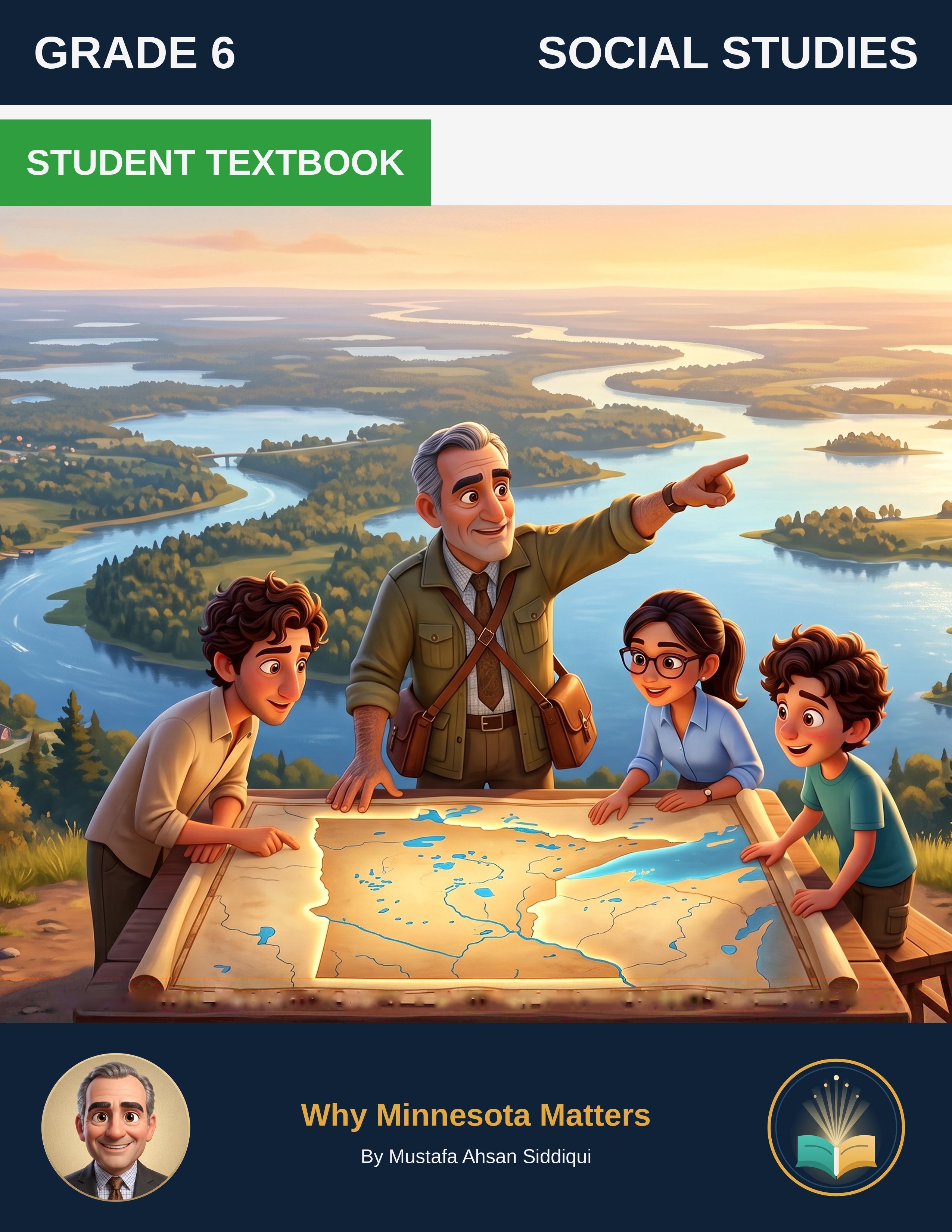 Student Textbook
Grade 6 · Minnesota Studies
Minnesota’s story from its first peoples to today — multiple perspectives, with Tribal Nations shown as sovereign, living communities.
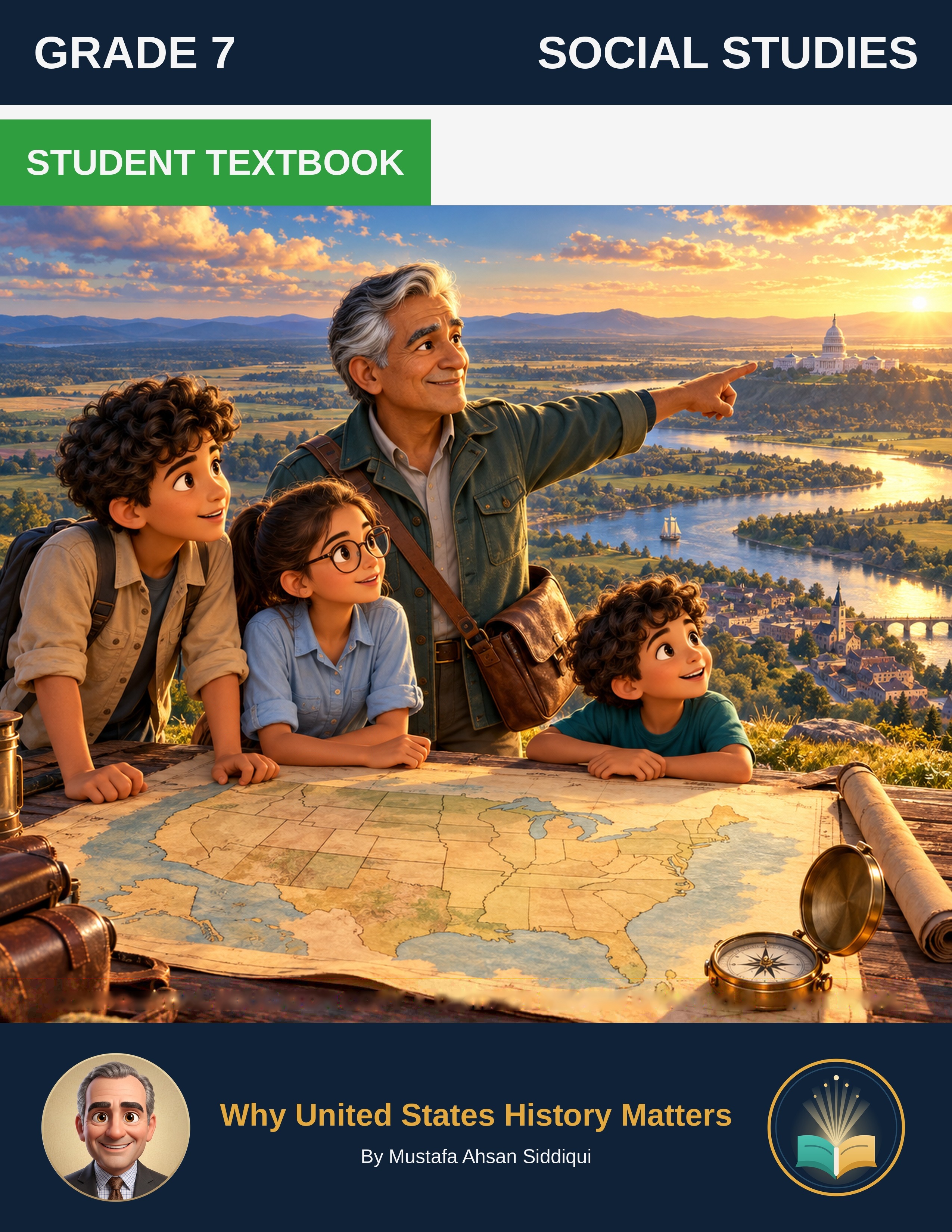 Student Textbook
Grade 7 · U.S. Studies
The American story — history and multiple perspectives for academic study.
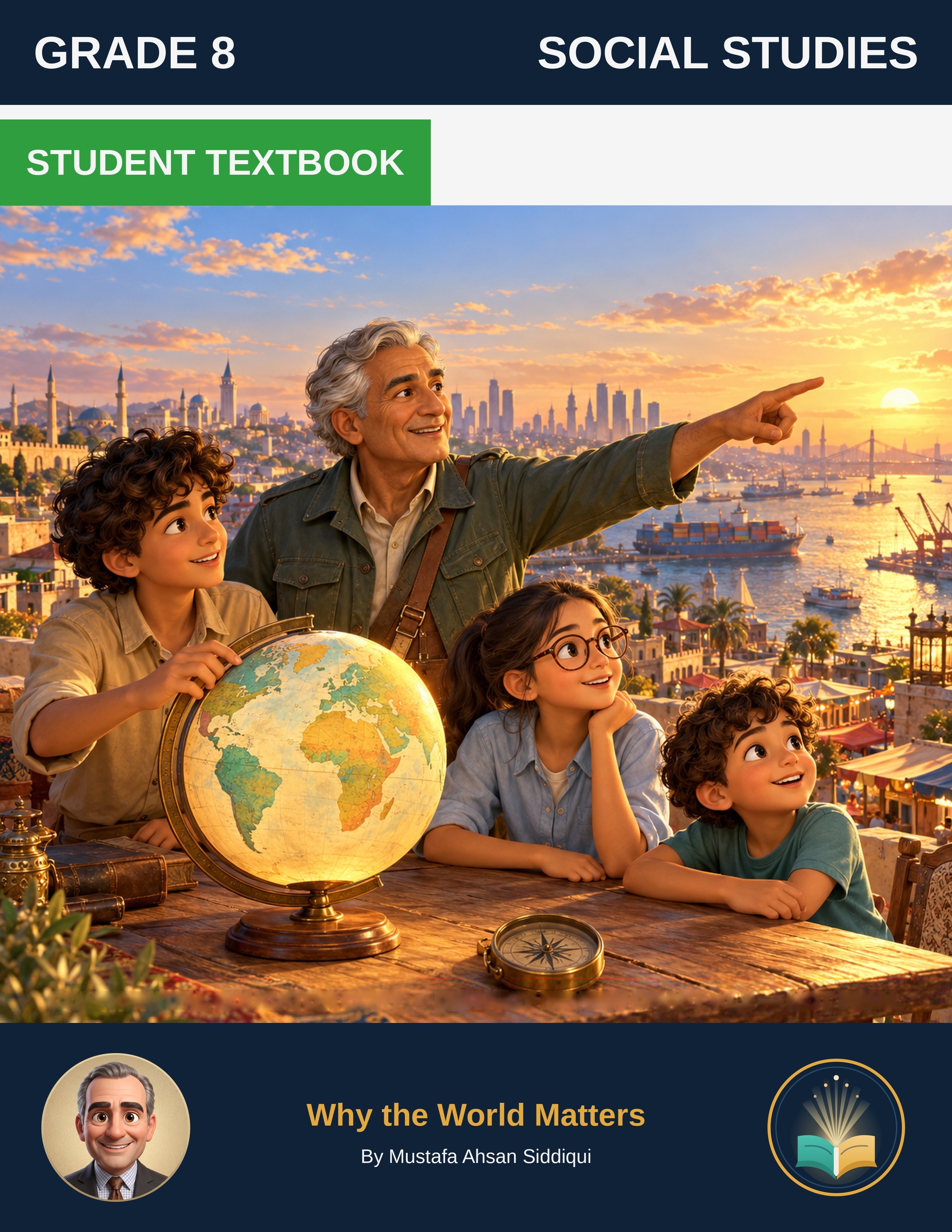 Student Textbook
Grade 8 · Global Studies
World geography, economics, cultures, and belief systems, described comparatively for academic study.
Each grade is a complete digital set of four books: Student Book, Teacher Guide, Explorer’s Journal, and Assessment Forge. Printed versions also available.
Preview copies now available for school evaluation — request them for your committee.
Subject 1 · Available for pilot now
Minnesota Social Studies Curriculum — How the World Works™
A classroom-ready Social Studies system that teaches global history through connected civilizations — geography, trade, innovation, governance, and culture. Academically neutral, inquiry-based, and teacher-ready — planned to span Grades 1–12.
Designed around Minnesota’s 2021 K–12 Academic Standards in Social Studies — adopted in March 2024 and scheduled for full implementation in the 2026–27 school year. Alignment is publisher-determined pending external review.
A curriculum system — more than books
Student Books
Purpose-first readings that connect civilizations, evidence, and students’ own communities.
Teacher Guides
Teacher-ready guidance for every unit — built for real classrooms and real planning time.
Assessments & Activities
Checks for understanding, discussion prompts, maps, and hands-on activities.
In development: AI Teaching Companion, presentation slides, and a digital companion — see our roadmap.
Elementary
Book 1 · Available now
Story-driven readings, maps, and draw-to-learn activities that introduce how civilizations connect.
Middle School
Book 1 · Available now
Inquiry lessons built on evidence, comparison, and discussion — trade networks, urban systems, innovation, and global connections.
High School
Book 1 · Available now
Deeper historical analysis of civilizations, systems, and global exchange — built for critical thinking and discussion.
The first three books — one each for elementary, middle, and high school — are available for review today, with print editions headed to Amazon soon. The remaining grade levels of the full Grades 1–12 curriculum will follow, guided by Minnesota educator review and direction.